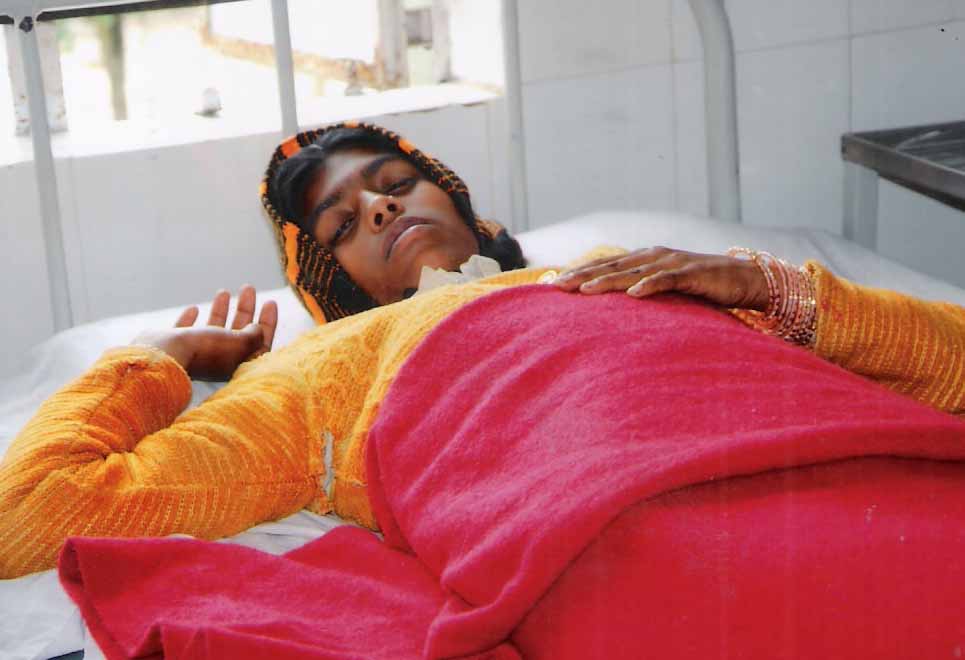
While Karnataka may have had a higher number of attacks on Christians over the last year, the report suggests that Maharashtra is the next Hindutva laboratory. "The new government in Karnataka is sensitive to the attacks on Christians. However, in Maharashtra, the police and the lower levels of state administration are highly saffronized," said Joseph Dias, author of the report and general secretary of CSF.
This is a blog dedicated to highlight the issue of Christian Persecution in India. The posts here in contain information about Christian Persecution in India from various sources with links and some exclusive to us. No Copyright infringement is intended. This is only for the purpose of spreading awareness about the ongoing Christian persecution in India. We have no political affiliations. We hope for a nation where all could live in peace with each other.
Wednesday, January 29, 2014
Karnataka, Maharashtra top attacks on Christians
While Karnataka may have had a higher number of attacks on Christians over the last year, the report suggests that Maharashtra is the next Hindutva laboratory. "The new government in Karnataka is sensitive to the attacks on Christians. However, in Maharashtra, the police and the lower levels of state administration are highly saffronized," said Joseph Dias, author of the report and general secretary of CSF.
Over 4,000 cases of anti-Christian violence: the "Report on persecution" presented to the Bishops
The Report was presented recently to Cardinal Oswald Gracias, Archbishop of Bombay and President of the Episcopal Conference of India. As reported to Fides, the document was drawn up thanks to the collaboration among the associations "Catholic Secular Forum" ( CSF), "All India Christian Council", "Evangelical Fellowship of India", "Global Council of Indian Christians", "World Watch monitor". The Report was delivered to the Bishops by the two lay Catholics Joseph Dias and Judge Michael Saldanha, respectively Secretary and President of CSF.
Out of 4,000 incidents, described in detail in the text sent to Fides, over 200 are severe cases of persecution which occurred mainly in some states: especially in Karnataka where, despite the change of government, Christian persecution is widespread, and Maharashtra that "seems to be the next laboratory of Hindu extremism", notes the text. Other states in the "top ten" of persecutions are: Andhra Pradesh, Chhattisgarh, Gujarat, Orissa , Madhya Pradesh, Tamil Nadu, Kerala.
The Report also examines the flaws in the Indian legal system, which allow the spread of violence and the impunity of the perpetrators. The laws "under fire" are the Presidential Order of 1950, which denies Dalit Christians and other minorities the rights granted to Hindu Dalits; the anti-conversion laws in force in seven Indian states like Orissa, Arunachal Pradesh, Madhya Pradesh, Rajasthan, Gujarat, Chhattisgarh, Himachal Pradesh.
The Report points out that a comprehensive law to stop violence, presented last year, has not yet been examined and discussed in Parliament. In most of the cases examined, "the police refuse to register complaints" and the Indian media fail to report the news or minimize it, the text concludes. (PA) (Agenzia Fides 23/01/2014)
Click here for source
Saturday, January 18, 2014
Benny Hinn's Prayer Conference Appearance in India Cancelled After Hindu Outcry
Tuesday, January 14, 2014
Pastors and Believers Arrested in Chhattisgarh
Police arrested two pastors and seven believers including three women on charge of forcible conversion on 29 Dec in Ranibagicha, Jashpur District of Chhattisgarh.
A group of Hindu extremists barged into the Sunday worship meeting conducted by Pastor Palath Dungdung and accused the Christians of forceful conversion and of luring people to convert into Christianity, reported our correspondent, Rev Akhilesh Edgar.
The extremists also entered into the nearby house church of Calvary Gospel Mission worship meeting conducted by Pastor Lalit Kujur and accused him of forceful conversion.
Police reached the spot and took 25 Christians including two pastors to the police station for questioning.
Two pastors and seven believers including three women were arrested under Sections 295 A, 153 A, 120 B of the Indian Penal Code and Sections 3 & 4 of Chhattisgarh Freedom of Religion Act.
They were sent to District Jail. Jashpur on the same day. Their bail petition has been rejection.
On the same day of the arrests, local Bhartiya Janta Party leader Ranvijay Singhdev accompanied by Rajsharan Bhagat (BJP MLA from Jashpur), Jageshwar Ram (Ex MLA), many leaders ad workers of BJP and Hindu organizations sat on one day hunger strike on 29 December, to protest against "conversion".
EFI News
Pastors and Believers Arrested in Chhattisgarh
Police arrested two pastors and seven believers including three women on charge of forcible conversion on 29 Dec in Ranibagicha, Jashpur District of Chhattisgarh.
A group of Hindu extremists barged into the Sunday worship meeting conducted by Pastor Palath Dungdung and accused the Christians of forceful conversion and of luring people to convert into Christianity, reported our correspondent, Rev Akhilesh Edgar.
The extremists also entered into the nearby house church of Calvary Gospel Mission worship meeting conducted by Pastor Lalit Kujur and accused him of forceful conversion.
Police reached the spot and took 25 Christians including two pastors to the police station for questioning.
Two pastors and seven believers including three women were arrested under Sections 295 A, 153 A, 120 B of the Indian Penal Code and Sections 3 & 4 of Chhattisgarh Freedom of Religion Act.
They were sent to District Jail. Jashpur on the same day. Their bail petition has been rejection.
On the same day of the arrests, local Bhartiya Janta Party leader Ranvijay Singhdev accompanied by Rajsharan Bhagat (BJP MLA from Jashpur), Jageshwar Ram (Ex MLA), many leaders ad workers of BJP and Hindu organizations sat on one day hunger strike on 29 December, to protest against "conversion".
EFI News
Thursday, September 12, 2013
Christian Widows in India Beaten for Refusing to ‘Reconvert’ to Hinduism
NEW DELHI (Morning Star News) – When Laxmi Sovi, a Christian widow in India’s Chhattisgarh state, heard her door opening one morning last month, she could not have guessed that by the next day she would be hospitalized and her home demolished.
Three Hindu extremists identified only as Veeru, Chaytu and Mangru barged into Sovi’s house in Kakadi Beda village, Kondagoan, at 9:30 a.m. on Aug. 24 and demanded that she and her children convert back to Hinduism, she told Morning Star News. In spite of threats, she declined.
The three men left.
That night at about 11 p.m., the same Hindu nationalists forced their way into her house.
“They asked me why I converted to Christianity and left all the Hindu idols, and they also told me that I should reconvert to Hinduism or else be killed,” Sovi said.
Doddamma’s daughter Laxmi was found semi-conscious after the beating. (Morning Star News)
Sovi, who became a Christian four years ago, refused to renounce Christ. The Hindu extremists began beating her and her two children, threatening to rape her teenage daughter. The children managed to escape and hid in the surrounding jungle, but the men continued to slap, kick and punch Sovi as they insisted she leave Christ.
One of the men struck her on the neck with a club, and she collapsed in pain. Later she also took refuge in the jungle, where she hid for the rest of the night – with a fractured left hand, swelling on her neck and multiple contusions.
The next morning, Sovi returned home with area Christian leaders to find her house demolished. She received treatment at Rabindranath Tagore Hospital in Kondagoan.
“As her house was completely demolished, she is taking shelter at the house of another Christian in the area,” the Rev. A.K. Netam, an area pastor, told Morning Star News.
Mother, Daughter Dragged to Temple
A week before, in the southern state of Karnataka, Hindu extremists dragged another widow, along with her daughter, to a Hindu temple and beat her unconscious when she refused to convert back to Hinduism.
Led by Hindu extremist Chinna Bhovi, the assailants forced their way into the home of a widow who goes by the single name of Doddamma at 6:30 p.m. on Aug. 18 in the Government Ashraya housing area of Chickmagalur, pastor T.S. Surendara of the Rehebothe Prarthana Mandir Church told Morning Star News.
The Hindu nationalists asked them who gave them permission to convert to Christianity and talk about Christianity with their neighbors, Surendara said. They dragged Doddamma and her daughter, Laxmi, to a Hindu temple and tried to force them to convert back into Hinduism, but they refused to renounce Christ.
“The extremists beat, kicked and punched them with their hands for almost an hour and uttered foul abuse at them,” Surendara, their pastor, said.
Doddamma lost consciousness, and her daughter was semi-conscious when neighbors found them lying on a road, reported attorney Moses Muragavel of the Karnataka Legal Aid Cell.
Doddamma and Laxmi suffered multiple bruises and swelling; they were hospitalized for three days.
“The extremists also looted Doddamma’s house, stole their safe cupboard, clothes, ration card and all important documents, and further vandalized her house,” Surendara said.
Police have registered a First Information Report against seven suspects under various sections of the Indian Penal Code, but no arrests had been made at press time.
In another incident in Karnataka, Hindu extremists attacked house church pastor Parama Jyothi in Mobanahalli village, in Chitradurga District, on Aug. 11.
“At about 10 a.m., the extremists barged in while we were praying and started to beat me up,” Pastor Jyothi told Morning Star News.
The Hindu extremists dragged him along a road, tearing his clothes until he was half-naked. Pastor Jyothi’s body was covered in bruises, and three front teeth were broken, reported Muragavel of the Karnataka Legal Aid Cell.
Church members took their pastor to a hospital, where he was treated for about a week.
Pastor Jyothi submitted a letter to the Bejikere Police Station requesting protection, as the Hindu extemists had sternly warned him that he should vacate the house and leave the village within a week if he continued to follow Christ.
Credit: Morning Star News
Click Here for source
Wednesday, September 11, 2013
Man arrested for 'attacking' churches in Bangalore, TN
Bangalore: A man having suspected links with a fundamentalist organisation has been arrested for his alleged role in vandalising and attacking churches in the city and Tamil Nadu between 2008 and 2009.
"A special investigating team on September 3 arrested 33-year-old Sajjan Kumar, a resident of Tamil Nadu, for his involvement in church attacks here," City Police Commissioner Raghavendra Auradkar told reporters here.
Police suspect Kumar owes allegiance to a fundamentalist organisation. "We are investigating it," he added.
Kumar is alleged to have attacked and damaged four churches situated at Yedavanahalli and Huskurgate in city limits, Auradkar said.
Tamil Nadu Police have also filed a case against Kumar for allegedly setting on fire a scooter parked near a hotel where a Christian prayer was held.
"A case was registered in Mathigiri police station limits in Tamil Nadu," he added.
PTI
Click Here for Source
Wednesday, September 04, 2013
Fresh attacks against Christians in Karnataka
by Nirmala Carvalho
Three new attacks occurred in the Indian state of Karnataka in August alone, all by Hindu extremists.
The latest occurred on 18 August in Chikkamalaguru District when Hindu radicals stormed the home of Ms Doddamma, a member of the Rehebothe Prarthana Mandir Pentecostal Church.
The group of men asked her why she visited Hindu families and who gave her permission to preach Christianity.
Faced with her silence, the men dragged her and her daughter to a nearby Hindu temple, where they ordered some holy men to reconvert them to Hinduism. Faced with their refusal, the Hindus brutally beat the two women, as others destroyed their home.
On 11 August, in Chitadurga District, Rev Paramajyothi, the pastor at an independent Pentecostal Church, was attacked by Hindu ultra-nationalists. Dragged out of his church, he was stripped him and beaten mercilessly under the eyes of his congregation and family. The religious leader suffered several injuries, including three broken teeth.
Once discharged from the hospital, he turned to the police in Bejikere for protection since the fundamentalists had issued threats against him, ordering him to leave the village. Police instead filed a complaint against the attackers, as well as the clergyman.
On 3 August, 50 Hindu extremists violently attacked Somashekarwas, an Evangelical Christian in Bijapur District. Pulling his hair and ripping his clothes, they ordered him to reconvert to Hinduism. They also swore at his wife Kusumabhai and ordered the couple to leave the village if they were not willing to renounce Christianity. Because of their refusal, the attackers reported them to the police in Nedugundhi, accusing them of practicing forced conversions.
Adapted from Asianews.it
Click Here to see source
Tuesday, September 03, 2013
North India church destroyed by 1,000-strong mob
Shouting religious slogans, a mob estimated at 1,000 people has destroyed a Christian church under construction in northern India, according to a report received from church leaders in the region. The attack occurred on Sunday, August 25.
An anti-Christian mob destroyed the local congregation's church building, which was in the final stages of construction
With the building demolished, the mob began to beat the pastor, his mother and church members, who were able to flee and went into hiding for the night. The extent of their injuries is not known. No deaths were reported.
"It is our desire that these who are persecuting will know the love of God for them," said KP Yohannan, Gospel for Asia (GFA) founder and president.
The Christian congregation had begun construction more than two years earlier, but quickly met resistance and had been forced to stop the work. After much prayer, the climate seemed to improve and construction resumed. Building had progressed uneventfully to the point that workers were ready to install the roof, when the attack came this week.
Earlier that afternoon, a small group from the community confronted the pastor and demanded that construction cease, saying the building was not wanted. Recognizing the growing tension, the pastor stopped the work.
Despite the pastor's decision, the group rallied the villagers to a meeting and incited them to attack.
The day after the attack, regional leaders first prayed and then met with local police, who declined to become involved. Despite continuing threats, the leaders returned to the site to survey the damage and take photos.
Church leaders have requested prayer from believers around the world that God will protect the pastor, his family and the congregation; heal the pastor's son, whose medicine cannot be obtained in the current uneasy climate; and open the eyes of the villagers so they might experience the love of Jesus in their lives.
Click Here for Source
Monday, August 26, 2013
Five Years On From Kandhamal Violence, Victims Await Justice, Rehabilitation, And Peace
By Christian Solidarity Worldwide
25 August, 2013
The Christian community in Kandhamal district, Odisha state (formerly Orissa) is this weekend marking the fifth anniversary of a wave of violence in which an estimated 90 people were killed and at least 54,000 displaced. Much of the violence was brutal in nature, including sexual violence and burning or burying victims alive.
The long-term impact of the 2008 violence, which was the culmination of decades of anti-Christian hate speech and smaller-scale attacks in the area, continues to be felt. Against the backdrop of a rising number of acquittals of perpetrators of the 2008 violence, the Christian community still faces harassment and violence. Reportedly, 29 girls from their community were sexually assaulted in the last year alone.
Thousands of victim-survivors still fear returning to their villages owing to the threats they continue to receive. At least 5,000 have relocated to Salia Sahi, the largest slum in state capital Bhubaneswar. Some have migrated to other states, including Kerala. Many in these displaced communities have paid a significant economic penalty for their relocation.
Paul Pradhan, director of Pallishree Seva Sadan, a social welfare centre in Paburia which was destroyed in the violence and has not been rebuilt, said, “Our people have lost everything. They have lost their houses, their tools, everything. Many people have left and have still not come back to their villages. In most areas, peace has still not been restored. Until adequate compensation is given, the people will cannot recover. The government is not giving enough compensation. There should be a re-survey of damages. Even my own case is very miserable. I am not able to recuperate, while perpetrators are thriving. My own place is still destroyed. I am also not well, my health is not well”.
Many of the victims are still awaiting justice and adequate compensation for their losses. Although the conviction rate of around 30 percent is significantly higher than the national average, many of those convicted are now on bail, even for the most serious offences, and the majority of complaints were never subject to a police investigation. Many witnesses in the cases that have been investigated have been threatened against giving evidence in court, and without sufficient protection, a large number have lost faith in the justice system.
Some human rights activists report facing harassment not only from Hindu extremist groups but also occasionally from the police, who accuse them of being Maoist supporters.
Fr Ajay Singh, a prominent Odisha-based human rights activist, faced renewed threats after being awarded the Minority Rights Award by the National Commission for Minorities in July this year. He said, “Insecurity and fear still prevail among the Christian community here due to the rise in the number of acquittals of criminals. Justice delivery systems have failed and are costly. The people cannot afford it. The Church and the civil society groups are not able to make the government accountable to the people. Neither do the duty-bearers feel obliged to the community. Besides the insecurity and fear, frustration is also rampant. 90% of victims are struggling for their own livelihood. This is a multi pronged problem. The challenge before us is to make the duty bearers accountable. How do we make the criminal justice system function? Who will do it? There is no other way but to make people aware. The right holders should be encouraged to stand up for their rights. The history of the Kandhamal situation shows us that every time we spoke about peace without fighting for justice, violence continued to take place”.
David Griffiths, South Asia Team Leader at Christian Solidarity Worldwide (CSW), said, “CSW remains deeply concerned by the poor delivery of justice, inadequate rehabilitation for victims, and the lack of genuine peace in the area. We are also concerned by reports of continuing incidents of violence, and by allegations of harassment by human rights defenders working on behalf of victims. Much more needs to be done locally before it can be said this violence has been resolved. Communal violence of this nature has a long genesis and a long-term impact, and often follows a predictable pattern. In recognition of this significant anniversary, we again urge the Government of India to introduce the Prevention of Communal and Targeted Violence Bill, which will provide a much more effective framework for dealing with violence of this sort in future.”
Kandhamal, Five Years Later: Why The Silence?
http://www.countercurrents.org/sasi250813.htm
By K.P. Sasi
25 August, 2013
Countercurrents.org
What is it that makes human beings express more violence than animals? This is certainly a significant question we may ask in our journey called life. While the animals express violence for food, protection of territory and out of fear, which the human species also do on a much larger scale, the most brutal expressions of violence by the human beings can shame and shock the brutes themselves. This is the only species which can kill hundreds, thousands or millions on the basis of their ideologies, world view, belief systems, political power, economic power, power of social and cultural identities and the need to control nature. In that sense, unfortunately, we belong to the most insecure and violent species on this planet and it is because of this insecurity that we took extreme pride of being part of an identity called `human beings’. On this day of August 25, 2013, which rightfully should have been observed as a Khandamal Day nationally and internationally and unfortunately being ignored by this largest democratic, secular and sovereign State called India, it may be more appropriate to begin with our own limitations – our own silence which became the cause and effect of any large scale violence expressed in history.
It is five years since the major violence took place in Khandamal on August 25, 2008. It was the biggest anti-Christian violence in Indian history and the biggest communal violence in Orissa. The organized violence started in 2007. More than 600 villages in Khandamal district alone were attacked and 5600 houses were looted and burnt. Around 54,000 people became homelss and thousands fled the region out of fear. Over 100 people were killed, including women, children, disabled and the old. Women were raped and subjected to sexual assault. 295 churches were destroyed. 13 schools colleges, and offices of non-profit organizations were destroyed. Dalit Christians and Adivasi Christians were forcefully converted to Hinduism, though there is no tradition to convert from other religions to Hinduism, since the caste identity in Hinduism comes from birth only. All those who were converted into Hinduism at the axe-point are back into their own faith in Christianity today. Education of more than 10,000 children were disrupted and many of them still live with mental trauma. There were no proper systems of counseling.
After five years, when you look back, you will find that the rehabilitation process and compensation to the victims are not properly or adequately carried out. Most of those who are responsible for this gruesome communal crime are still to be punished. People are still waiting for justice. Thus Kandhamal remains as a blot on India’s secular image.
The question why Kandhamal happened is not much different from why the communal fascist genocide happened in Gujarat. The process of years of preparations for violence in both Gujarat and Kandhamal was similar. Teesta Setelvaad had warned years before both Gujarat communal violence and the Kandhamal communal violence that the preparations for violence is going on in both these places, in her famous magazine called Communalism Combat. These warnings were not sufficiently heard by the activists. The disaster of communal violence in Gujarat and Kandhamal could have been reduced to a certain extent if such warnings were discussed right from the initial stage of preparations for violence.
However, there is a difference between the situations of Kandhamal and Gujarat. There was still a small crowd who tried to speak out and act against the violence in Gujarat. There were feminists, trade unions, various shades of left and secular forces, civil liberties organizations, NGOs, Christian organizations with people like Fr. Cedric Prakash, secular Muslim figures like Prof. Bandookwalah, a small section of film/media internet activists to respond right from the initial stages. The social context in Kandhamal did not have this luxury. There was a weak or non-existence of various shades of left and secular forces, like minded trade unions, Muslims or other religions other than Christians and Hindus, lack of civil liberties organizations and an obvious lack of urban middle class activists who could respond and sustain the campaign effectively. Hence, whatever national campaign that has sustained the campaign for the human rights and justice for the people of Kandhamal was to a great extent due to the efforts few people like Fr. Ajay Singh who was based in Kandhamal, human rights activists like Dhirendra Panda who was based in Bhubaneswar and many other individuals and groups based on the sustained energies of such people. But the obvious lack of a diversity of potential individuals, groups and political forces in Kandhamal during the time of communal attack, could have been one of the main limitations, to explain why the Kandhamal Day is still not being observed widely at a national level.
No matter the limitations of social contexts, even with the existing forces which care for justice for the victims of Kandhamal ought to receive further support and strength. Perhaps one factor which is still blocking a proper national action on Kandhamal is the fact that all the churches that have been attacked belonged to Dalit and Adivasi Christians. I have always wondered, if the mainstream Christians and other potential voices in this country would have reacted differently, if the destruction of Churches, worship places, houses and properties along with the gruesome violence on men, women and children had happened to the upper caste Christians. This question came to my mind when I happened to see the photograph of the news of a public meeting in Malayalam mainstream papers showing the Bishops along with L.K. Advani, soon after Kandhamal communal violence. If I as an atheist was insulted and humilitated by such an act, one can imagine what could be feelings of the the Dalit Christians and Adivasi Christians on such a behaviour. It is a well accepted understanding among the activists who work on Kandhamal today that the memories of Kandhamal still do not hold the consciousness of the mainstream India, since the immediate victims were Dalits and Adivasis.
While the notion of secularism as defined so far is being debated in India and while I agree with many of the criticisms on the limitations of its present defined meanings, I would still use it due to the following reasons: 1. It provides at least a minimum protective space for the victims of communal violence through the Indian Constitution, and 2. There is still a lack of a proper alternative category to execute the political functions of a word called secularism. Therefore, in the absence of a politically accepted category, it may be wiser for activists to appropriate it and redefine the word secularism in such a way that all spiritualities, belief systems and religions are treated with equal respect and harmony irrespective of the number of followers. When I say belief systems, I would include atheism also. However, I am a bit critical of the way secularism is promoted so far as an excluded community of those outside religions. In the case of Kandhamal, I have met many people within different faiths, to be rightfully called secular Hindus or secular Christians. Take the cases of Hindu houses who provided shelter to many Christians in spite of knowing that their lives would be in danger if the blood spitting fundamentalists had found out about it, at a time when Kandhamal was burning. How did ordinary Hindu women express such courage? During the partition time, ordinary Muslim families in Pakistan have expressed courage to provide protection to the Hindus against the fanatics. In Gujarat, there were Hindus and Christians who expressed such courage. If this is not secularism, what else do we call such behaviour? To my mind, the only wide-spread secularism that exists today is within different faiths more than outside. The community of people like me still belong to the smallest minority in the country. And I hope that people like us can also apply for the minority status and protection of minority rights for the atheist community, if we are slightly organized in future! But unfortunately, it may not happen, since the heads of each atheist is turned in different directions from the other!
Perhaps what distinguishes the human species from the rest of the species is the expression of compassion undertaken by different individuals from different faiths, risking their own lives due to the firm conviction that lives of others from other religions, other communities and all those whose freedom is denied, are also as important as theirs. If the word called humanity has any meaning, it is this expression of compassion coupled with fearlessness. We must always remember that the fruits of our freedom that we enjoy so far are only due to such fearless compassion expressed by many individuals, groups and movements, articulated and expressed throughout the segments of history. And the only hope for the survival of the human species and the rest of the species is this fearless compassion expressed by a section of the society, in spite of being part of a human race. This is the best lesson we can learn from those fearless people of Kandhamal, so that their concerns can be taken forward on the forthcoming Kandhamal Days, to remember the gravity of the problems as well as hopes for the future!
K.P Sasi is an award winning film director and a political activist. He is also an Associate Editor of Countercurrents.org. He can be reached at kpsasi36@gmail.com
Saturday, August 24, 2013
No action taken by NHRC on Kandhamal anti-Christian violence: Justice Shah
New Delhi/Odisha: Former Delhi High Court Chief Justice AP Shah on Friday accused the National Human Rights Commission (NHRC) of not taking any inaction on Kandhamal communal riots.
Shah headed the National People's Tribunal on Kandhamal riots.
"We submitted our report to the NHRC in 2010, however, no action was taken on the report. There is an international acceptance for NHRC and it is considered to be the guardian of human rights. It is surprising that NHRC has taken cognisance of various cases across the country but not in the case of Kandhamal communal riots," he said.
Shah was speaking at the launch of the book 'Kandhamal craves for justice', authored by journalist Anto Akkara.
He said the riots had affected many in Kandhamal and stressed on the need to strengthen commissions like NHRC.
Click Here for source
Sunday, July 14, 2013
Dr. Jaishankar found dead near Jeypore, Orissa
Saturday, July 13, 2013
Missionary missing in Orissa since Thursday
Mr Jai Shankar, a missionary with Blessing Youth Mission Bhopal, is missing since 11th July 2013 from Jeypore district in Orissa.
He had gone to Orissa for a special meeting at Jeypore. According to reports his bike has been recovered from a place called Lamta which is about 40 kilometres from Jeypore city. The bike was found near a river.
Kindly pray for his safety and also that the Lord may bring him back safely.
Thursday, July 11, 2013
Congress and BJP: United in Targeting the Church
BJP and Congress governments play politics with conversion bogey
By John Dayal
India’s microscopic Christian community and its clergy may become “collateral damage” of an unspoken but very palpable competitive wooing of the majority Hindu community, specially in central India, in the run up to the General Elections in 2014, and elections to State legislative assemblies even earlier.
Three significant recent developments show the political trend. The State of Madhya Pradesh, which was among the first [with Orissa and Arunachal Pradesh] to seek a curb on conversions to Christianity through its ironically named Freedom of Religion Act in 1968, is now adding some more draconian provisions to the notorious law. Neighbouring Maharashtra is understood to be planning a similar law to criminalize conversions. And up in the Himalayan north, the Himachal Pradesh government is planning to seek the Supreme court’s help to reverse a High court judgment which had struck down some of the more vicious components of the state’s anti conversion law, including one which required government’s permission before change of faith.
Madhya Pradesh is ruled by the Bharatiya Janata party, now gone entirely overboard with the Hindutva agenda of its ideological parent, the Rashtriya Swayamsewak Sangh whose chosen Prime ministerial candidate Narendra Modi has made it clear where his priorities lie. His lieutenants have called for a building of a Temple to Lord Rama on the ruins of the Babri mosque the RSS groups demolished in 1992. Modi himself has lost no opportunity to stress his support to the Hindu heartland.
But it is the Congress that governs Himachal Pradesh. The current chief minister had enacted this law, and he now wants all its “teeth” restored by the Supreme Court. Maharashtra is also ruled by the Congress in a coalition with the Nationalist Congress Party of Union Agriculture minister Mr. Sharad Pawar, who too professes a vey “secular” ideology to woo the large Muslim population of his home State.
The mainstay of the Congress political platform has been its traditional non-partisan ideology – and its affirmative action for the poor, the marginalised, the religious minorities, Tribals and Dalits. But it has been an open secret from the days of Mahatma Gandhi and the illustrious leadership of the Freedom Struggle, that Congress also harbours majoritarian elements who surface every time the party has to seek votes in the face of a direct challenges by the BJP and other Hindutva groups such as the Shiv Sena in Maharashtra.
The Maharashtra government has been secretive on its reason for contemplating a law to curb conversions. It has no data to show the number of conversions done through fraud or coercion – the two reasons given as grounds for vitiating a change of faith by a citizen even in the states of Arunachal, Odisha, Madhya Pradesh, Chhattisgarh, Gujarat and Himachal which do have these laws on the statute books.
What complicates the politics of such moves against conversions -- and the phrase is generally understood to mean conversion to Christianity, and not to Islam, Buddhism, Sikhism and Hinduism -- is the focus on Christian preachers and evangelists. Islam has since Independence not really been involved in proselytizing with its numbers growing only through birth. There have been many instances of Hindus converting to Sikhism, a practice that was common before the Army assault on the Golden Temple in Amritsar in 1984 at the height of the separatist Khalistani militancy, but still takes place in the Punjab and New Delhi. Conversions to Buddhism take place on a mass scale from the ranks of the Dalits, who are then called Ambedkarites or Neo-Buddhists. Five hundred thousand of them were converted to Buddhism in Nagpur by the late Dr. B R Ambedkar, the chair of the committee that wrote India’s Constitution. A recent celebrated mass conversion took place in recent years in Mumbai where 50,000 Dalits changed faith at a popular public grounds in the heart of the city under police protection.
The Vishwa Hindu Parishad (World Council of Hindus) and the Vanvasi Kalyan Ashram (Jungle Dwellers Welfare Association), frontal organisations of the RSS working in the tribal areas, routinely convert animistic and Christian tribals to Hinduism under what they call a Ghar Wapsi programme, “home-coming” to their faith. There has been no legal action ever against the VHP, or the RSS.
So far the Himachal law was the most draconian as it forced citizens and their pastors to give a month’s notice to the state authorities and then await their decision before they could formally profess the faith. The Evangelical Fellowship of Indian, and a secular NGO, ANHAD led by celebrated civil rights activist Shabnam Hashmi, moved the high court which struck down these obnoxious clauses.
It is these very sections that Madhya Pradesh now wants to incorporate into its old law. It in fact goes a step further and wants the police to launch mandatory enquires into why the person wants to change his faith – in effect why he wants to leave Hindu fold. Pastors can be jailed for four years and fined a hundred thousand rupees if they break the law.
In states where the police force and the subordinate bureaucracy is known to be bigoted sand partisan, such laws can become extremely punitive. Human Rights activists have often pointed out that such laws also encourage the persecution and victimization of the Christian community, especially of the clergy.
The Church does not seem to have anticipated this. It also has no thesis for a united pre-emptive challenge to such laws. Individual groups go to court, but it is not an easy process. Some sections of the church, in fact, are quick to blame Pentecostal groups as inviting such laws by their provocative evangelisation. Others seem ready to sue for peace, and are already making overtures to the BJP as was seen in the YMCA feting Mr. Narendra Modi at a function in Ahmedabad last month.
The last time the Church voiced its anger was when the then Prime Minister, Mr. Atal Behari Vajpayee, called for a “national debate on conversions”, and the Catholic Bishops Conference president, Archbishop Alan de Lastic, challenged him, pointing out that such talk encouraged violence against hapless Christians in the country. It remains to be seen how the church will respond now.
Madhya Pradesh anti-conversion amendment passed.
Congress MLAs staged a walkout during a discussion on the MP religious freedom (amendment) bill after speaker Ishwar Das Rohani announced an extension in the time of the House beyond 5pm to complete the legislative work listed for Wednesday.
Congress MLAs staged the walkout protesting that they did not get a chance to speak on the bills as they were expecting the legislative work to be postponed to Thursday as it was 5pm -- the time when proceedings normally end.
The MP religious freedom (amendment) bill, 2013, was the only legislation that was passed after a brief discussion participated in by Congress MLAs.
Eleven other amendments to existing acts were passed in a span of 20 minutes without any discussion.
Speculation was rife that the assembly may be adjourned sine die on Thursday as the government’s essential legislative work of passing the supplementary
demands and the amendment bill had been passed.
Home minister Uma Shankar Gupta introduced the MP religious freedom (amendment) bill in the House. Ramniwas Rawat of the Congress while speaking on the discussion questioned the need for the amendment.
He said there was no need for an amendment since there was no issue arising out of religious conversions in Madhya Pradesh.
He questioned the home minister on the need to increase the punishment in forcible conversions.
Rawat said a provision for one-year rigorous imprisonment and Rs. 5,000 fine existed in the act and there was no need for amendment.
He also said it seems that the amendment was being brought in to harass those who run schools and colleges.
Yadvendra Singh of the Congress said the constitution allows people to choose their faith and the amendment was against this freedom.
MLA Arif Aqueel while participating in the discussion said that he was opposed to the amendment and demanded strict action against Rashtriya Swayamsevak Sangh (RSS) workers who carry out path sanchalan.
At this, the entire House protested with minister Kailash Vijayvargiya saying path sanchalan by RSS was not relevant to the discussion.
Aqueel said if the constitution provides for everyone to be equal the government should also act against the path sanchalan which is done bearing arms.
Gupta then said the state government had no role in the amendment and added that he was only doing what was proposed by the Union government.
Just then it was 5pm and the speaker announced an extension in time at which Congress MLAs protested and staged a walkout.
The amendment was passed by voice vote. After this, the speaker asked the ministers concerned to table bills and had them passed with only treasury benches eyeing the motions.
The bills that were passed are the MP essential services maintenance and prevention of disruption (amendment) bill, 2013, MP water regulation bill, 2013, MP private professional educational institutes (regulation of admission and fee control) amendment bill, 2013, MP panchayat raj and gram swaraj (second amendment) bill, 2013, MP municipal bodies law (amendment) bill, 2013, MP criminal procedure code (MP amendment) bill, 2013, MP land revenue code (amendment) bill, 2013, MP government employee (superannuation age) amendment bill, 2013, MP public places (religious structures and regulation of activities) amendment bill, 2013, MP private universities (establishment and working) second amendment bill, 2013 and MP entertainment cess legalisation bill, 2013.
Click Here for Source
Wednesday, July 10, 2013
Protests over 'tribal' Virgin Mary and baby Jesus in Jharkhand
From BBC News. See below for link.
A new statue which shows Virgin Mary and baby Jesus as tribals has been installed in a church in the eastern Indian state of Jharkhand, sparking off protests from non-Christian tribal groups.
Wearing a red-bordered white sari, red blouse, necklace and bangles and holding baby Jesus in a cloth sling, the statue has invited both anger and astonishment.
Unveiled by Cardinal Telesphor P Toppo on 26 May, the statue stands tall in the local church in Singhpur village, 15km (nine miles) from the state capital, Ranchi.
But ever since its installation, the statue has attracted the ire of some non-Christian tribal groups who are demanding its immediate removal.
Some of them even took out a protest march on 17 June in Ranchi in support of their demand.
"It is for the first time in the state that Mother Mary and baby Jesus have been portrayed as tribals. What was the need for it?" asks Bandhan Tigga, head priest of Sarna Society, which represents non-Christian tribal population of the state.
In Jharkhand, 27% of the population or 8.6 million people are tribals and only 3% of the tribal population is Christian.
"Showing Mother Mary as a tribal is a part of the larger design to make the tribal population believe that she was from their community and confuse them," says Mr Tigga.
"A 100 years from now, people here would start believing that Mother Mary was actually our tribal goddess. It's an attempt to convert Sarna tribals to Christianity."
'Nothing wrong'
Mr Tigga and his society leaders have asked the local Archbishop's House to remove the statue.
"If they do not remove it, a nationwide protest will be organised," he warns.
The Christian tribals, however, see nothing wrong with the statue - as residents of Jharkhand, they says they have "equal rights" over the red-bordered white sari and other tribal outfits.
"What's wrong in this? It's just like the Chinese, Japanese, Irish, German or even the African version of Mother Mary and baby Jesus," says Father Augustine Kerketta at the Archbishop House in Ranchi.
Some tribal groups have protested demanding the removal of the statue
"It happens everywhere as part of enculturation of the local tradition."
Cardinal Telesphor P Toppo is away in Rome and in his absence, Father Augustine has been nominated to negotiate with the non-Christian tribals over the controversial statue.
Father Augustine downplays the protests saying only a section of the non-Christian tribal population took part in them.
He says the charges levelled by the Sarna Society are "without any substance" and accuses some politicians of being behind the protests.
"General elections are due early next year and some people may wish to divide the Christian and non-Christian tribal populations for political gains," he says.
Nevertheless, he hopes to resolve the issue at their next meeting scheduled for 14 July.
But leaders of the Sarna Society say they do not expect much to come out of the meeting unless the statue is removed.
Click Here for Source
Tuesday, July 09, 2013
Concern over amendments in Madhya Pradesh anti conversion law
Christians in Madhya Pradesh have expressed fear over a proposed amendment to the anti-conversion law, making a priest party to a conversion.
The pro-Hindu Bharatiya Janata Party (BJP- Indian people’s party) has proposed the amendment to section 5 of the Madhya Pradesh Religious Freedom Act of 1968 that seeks to include priests, increasing fears among Christians that the move will open the door to false accusations of conversion by Hindu extremists.
It also makes prior permission a must. Permissions must be obtained at least a month in advance from the district magistrate. Persons who desire to convert as well as the priest who is preside over the religious ceremony will have to apply for this permission. There is also a provision for a police inquiry on the request.
The priest has to fill in an application form giving details of not just the venue and date of the ceremony, but also add a list of names and addresses of those seeking conversion. This application has to be submitted at the district magistrate's office a month before conversion.
The cabinet has approved this amendment and will introduce it in the monsoon session starting Monday. Once the bill is passed in the assembly it will become a law immediately as it does not now require the approval of the President.
The hurried decision is a part of the grand plan prior to 2014 general elections to create a climate of suspicion and hatred towards Christian community, the Global Council of Indian Christians (GCIC) said in a statement, demanding that the amendment be rejected.
India's Freedom of Religion Acts, referred to as anti-conversion laws, now have been implemented in six of India's 28 states and seven union territories. The laws appear to seek to curb religious conversions made by "force," "fraud" or "allurement."
“The laws obstruct conversion generally as Hindu nationalists invoke them to harass Christian workers with spurious arrests and incarcerations,” said Sajan K George, GCIC national president in the statement.
In the original Madhya Pradesh Religious Freedom Act of 1968, the priest is not a party to such a conversion. The law required the person who wanted to switch religion to inform the district magistrate of the decision.
Anti-conversion laws exist in Orissa and Chhattisgarh, where people can be punished for not informing the state about their plans to convert.
Click here for source
Response to amendments in Madhya Pradesh anti-conversion act by concerned citizens
Response to proposed amendments
9 July 2013
Press release
National civil society and the Christian community have condemned proposals to amend the already draconian Freedom of Religion Act by giving extraordinary powers to the administration to decide on religious choices of the citizens. The amendments will also make religious minorities even more vulnerable to attack from extremist fundamentalist forces such as members of the Hindutva Sangh Parivar.
The amendments have not been introduced in the state assembly, which has begun its new session. But available information says the amendments include punishments of 4 years imprisonment and one lakh, prior permission from the District Magistrate for even voluntary conversion, and police inquires before granting the permission.
Community leaders said they will protest peacefully across the state if the black law is made more vicious. They will also take legal recourse to challenge the law as unconstitutional.
The Himachal Pradesh High court recently similar struck down provisions in the state law for prior intimation or permission from authorities. These regulations anyway violate national and international guarantees of freedom of faith of citizens. It is tantamount to government interference in the constitutional guarantee on freedom of religion.
Christian community is particularly incensed and concerned at the unbridled power the amendments will give to district officials and police. We have often seen the bigotry of officials in the district administration and police in rural areas and small towns who often connive with the local Hindutva elements for attacks on home churches and harassment of pastors. As it is, the existing laws encourage Hindutva elements to carry on hate campaigns against the Christian community, its pastors, religious workers and common people. The state every year records many cases of violence against Christians. Similar is the experience of the community in every other state where such black laws exist.
The Christian religion is against forcible or fraudulent religion and has reportedly said that such “conversions” are against the basic teachings of Christ. No pastor can forcibly or fraudulently convert any person.
There is therefore absolutely no reason for the state government to enact such amendments. The state government has also not been able to give any convincing reasons why suddenly it sees the necessity of such a law.
प्रस्तावित संशोधनों के जवाब
9 जुलाई 2013
प्रेस विज्ञप्ति
पहले से ही कठोर धार्मिक स्वतंत्रता अधिनियम में संशोधन करने के प्रस्ताव की राष्ट्रीय नागरिक समाज और ईसाई समुदाय के नागरिकों ने निंदा की है.
यह संशोधन प्रशासन को असाधारण शक्तियां देकर नागरिकों के धार्मिक विकल्प पर फैसला करने के बुनियादी अधिकार में हस्तक्षेप करता है. यह संशोधन उग्रवादी कट्टरपंथी ताकतों जैसे की हिंदुत्व संघ परिवार के सदस्यों को धार्मिक अल्पसंख्यकों को और भी सताने के लिए और उन पर हमला करने के लिए बढ़ावा देगा.
हालांकि संशोधन राज्य विधानसभा के इस नए सत्र में अभी पेश नहीं किया गया है, लेकिन उपलब्ध जानकारी के अनुसार संशोधन में प्रावधान है की स्वैच्छिक मतान्तरण के लिए भी जिला मजिस्ट्रेट से पूर्व अनुमति, और पुलिस पूछताछ आवश्यक है नहीं तो 4 साल की कारावास की सजा और एक लाख रुपया जुर्माना भी देना होगा.
समुदाय के नेताओं कहा है की अगर इस काले कानून को और अधिक शातिर किया जाता है तो वे राज्य भर में शांतिपूर्ण ढंग से विरोध प्रदर्शन करेंगे. उन्होंने यह भी कहा है की इस कानून को चुनौती देने के लिए और इसे असंवैधानिक करार देने के लिए कानूनी सहारा लिया जाएगा.
हाल ही में हिमाचल प्रदेश उच्च न्यायालय ने इसी तरह पूर्व सूचना या अधिकारियों से अनुमति के प्रावधानों को राज्य के कानून में से ख़ारिज किया था. वैसे भी इन नियमों से नागरिकों के विश्वास की स्वतंत्रता की राष्ट्रीय और अंतरराष्ट्रीय गारंटी का उल्लंघन होता है. यह धर्म की स्वतंत्रता की संवैधानिक गारंटी पर सरकार के हस्तक्षेप करने के लिए बराबर है.
यह संशोधन जिस तरह जिला अधिकारियों और पुलिस को निरंकुश सत्ता प्रदान करेगा उससे ईसाई समुदाय विशेष रूप से नाराज और चिंतित है. हमने अक्सर ग्रामीण क्षेत्रों और छोटे कस्बों में गृह कलीसियाओं, चर्चों और पादरियों के उत्पीड़न पर हमलों के मामलों में जिला प्रशासन और पुलिस के अधिकारियों के पक्षपात और कट्टरता को देखा है और ये पाया है की वे अक्सर स्थानीय हिंदुत्ववादी तत्वों के साथ गुप्त रूप से सहयोग करते हैं या उनको अनदेखा कर देते हैं. वैसे भी, मौजूदा कानून हिंदुत्व तत्वों को प्रोत्साहित करते हैं की वे ईसाई समुदाय, उनके पादरियों, धार्मिक कार्यकर्ताओं और आम लोगों के खिलाफ नफरत का अभियान जारी रखें. राज्य में हर साल ईसाइयों के खिलाफ हिंसा के कई मामलों का रिकॉर्ड है. इसी प्रकार का अनुभव हर उस राज्य में है जहाँ इस तरह के काले कानूनों का अस्तित्व है.
ईसाई धर्म जबरन या धोखाधड़ी द्वारा धर्म परिवर्तन के खिलाफ है और हमेशा ये कहा भी है कि इस तरह के "मतान्तरण" मसीह की बुनियादी शिक्षाओं के खिलाफ हैं. कोई पादरी जबरन या धोखे से किसी भी व्यक्ति का धर्मं नहीं बदल सकता है.
इसलिए इस तरह के संशोधन को अधिनियमित करने के लिए राज्य सरकार के पास कोई कारण नहीं है. राज्य सरकार भी कोई ठोस कारण नहीं दे पाई है की अचानक एक ऐसे कानून की जरूरत उसे क्यों दिखाई पड़ती है.
Monday, July 08, 2013
BJP to seek amendment in anti-conversion law in Madhya Pradesh
The BJP government in Madhya Pradesh is preparing to introduce amendments to the 1968 Dharma Swatantrata Adhiniyam (Anti-Conversion law)
According to reports in Danik Bhaskar on July 5, 2013, the new amendment presses for four years imprisonment and one lakh fine for those involved in conversion.
It also makes prior permission a must. Permissions must be obtained at least a month in advance from the district magistrate. Persons who desire to convert as well as the priest who is preside over the religious ceremony will have to apply for this permission. There is also a provision for a police inquiry on the request.
The cabinet has approved this amendment and will introduce it in the monsoon session starting Monday. Once the bill is passed in the assembly it will become a law immediately as it does not now require the approval of the President.