This is a blog dedicated to highlight the issue of Christian Persecution in India. The posts here in contain information about Christian Persecution in India from various sources with links and some exclusive to us. No Copyright infringement is intended. This is only for the purpose of spreading awareness about the ongoing Christian persecution in India. We have no political affiliations. We hope for a nation where all could live in peace with each other.
Friday, April 29, 2016
Madhya Pradesh Police, Bajrang Dal stop church wedding in Satna
Friday, April 22, 2016
Why it's no longer safe to be a Christian in Chhattisgarh - Catch News
The attacks
- This Saturday, goons entered a church in Bastar and tried to set the pastor and his pregnant wife on fire
- They allegedly forced people to shout Jai Shri Ram
- Attacks on Christians have been on the rise in Chhattisgarh, often abetted by the administration
- How Christians are being targetted in Chhattisgarh
- The administration's response
- How violence is backed up by discrimination
Hooligans, reportedly carrying pistols, rods and knives, are said to have entered the church on Saturday night and assaulted Pastor Dinbandhu Sameli, his 7-month pregnant wife and daughter Roushni Vidya.
The attack
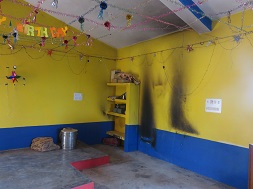
After entering the premises, the assailants attacked the pastor and tried to destroy the Holy Bible, furniture and religious material kept inside. They also tried to set the church on fire.The president of Chhattisgarh's Christian Forum Arun Pannalal says that the attack was carried out by the workers of Bajrang Dal and accused police of "covering up" the incident.
"The church was vandalised by Hindu fundamentalists during prayer meeting on Saturday. Activists wearing bhagwa (saffron) head bands, were forcing Christians to chant 'Jai Shri Ram', then they doused the pastor and his 7 month pregnant wife with petrol. And now the police is trying to protect them," he said.
The officer investigating the case, Abdul Khan, had a totally different view of the case. "Who told you that these people [the attackers] chanted 'Jai Shri Ram'? You go and ask those people these questions.. As far as the investigation is concerned, it's happening and in due time we'll catch the people responsible for this," he said.
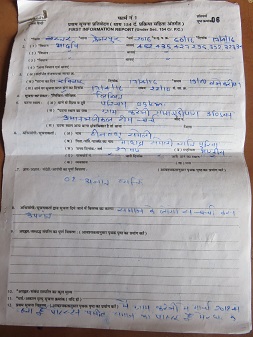
Instead police has registered an FIR under sections like 452 (house trespass), 395 (dacoity), 435 (committing mischief by fire and causing damage of Rs 100), 427 (committing mischief and causing damage of Rs 50), 295 (injuring or defiling place of worship) and Section 34 (acts done by several people in furtherance of a common intention).
Christians targeted
According to data compiled by Chhattisgarh Evangelical Foundation, the attacks on Christians are only increasing with time. But many feel that the attacks aren't just physical in nature. That the attacks often seem to be well coordinated and abetted by people in power.The table below shows the number of incidents of violence against Christians in Chhattisgarh. The data was compiled by the Catholic Secular Forum.
1. In 2013 some villages in Chhattisgarh decided to ban the entry of non-Hindus in their village. By last year, some 150 villages had passed such resolutions. These resolutions were finally taken to the High Court that struck them down as being unconstitutional.
2. Chhattisgarh is one of the 5 states in the country to have passed an anti-conversion law. While banning one's conversion to any other faith, the law has provisions for anyone wanting to return to their 'ancestor's faith' or their 'original religion'. This won't be considered 'conversion' according to the law.
3. Vishwa Hindu Parishad (VHP) banned distribution of sweets by Santa Clauses in the area on the occasion of Christmas. It has asked the community to instead refer to the sweets as 'prasad'.
4. It has also forced churches in and around Bastar to display pictures of the Hindu Goddess Saraswati in their schools.
"Physical attacks are not as worrisome as the attitude of this administration. They were privatising and taking over the model schools in the state and giving them over to a particular community group. We had to approach High Court against this and last month got a stay," Pannalal said.
He added that in Korba, Hindu fundamentalists were trying to force a sister to install Saraswati statue.
"When she refused, the collector of the area booked her in a case of disturbing communal harmony. When we approached National Human Rights Commission, they made the same collector the inquiring officer in the case," said Pannalal.
Reverend Rajesh Robin has seen communal attacks and state apathy from up close. He's been part of several protests, one of which was against vandalism of a cemetery. Instead of seeing police action against hooligans, he has been booked under several cases like attempt to murder, kidnapping and seeking ransom. He even had to spend 3 days in jail in connection with one of the cases.
"This year alone we've seen cases of pastors and parishioners being beaten in Bijapur, Narayanpur, Raipur, Madhauta...In Narayanpur they were beaten so badly that they had to be brought to Jagdalpur for treatment. In Jagdalpur we're still better off, but there still is a palpable fear of police and Hindu fundamentalists here."
It is because of incidents like the vandalism of their graveyard that shook the faith of people like Pastor Rajesh in the state.
"So these people recently demolished a wall that was being built around the graveyard. The police did not even register a case. Then these goons came to us and claimed that this graveyard belonged to their faith some 150 years ago. Just like they did in the case of Babri Masjid. So what are we supposed to do now?"
Pastor Surendra Chalki who runs an ashram for children and elderly women in Jagdalpur also suffered a shock recently. An brick and mortar ashram that he was building with the donations he collected from his neighbours, was demolished by the municipality, even though he had secured a nod from his gram sabha. But he's still hopeful.
"When we approached the collector, he told us that the ashram was demolished by mistake. We will hopefully get a clearance from all the authorities and start building the ashram afresh."
Edited by Aditya Menon
Click here for source
Indian pastor and pregnant wife attacked by militant Hindus

“Where is your Jesus?” the two men demanded; Sameli replied “We believe that he is with us”. When asked “Why don’t you believe in Ram?” husband and wife remained silent.


Monday, April 18, 2016
Church vandalized, pastor attacked in Chhattisgarh
Now, Bastar church vandalized, pastor & family attacked
Official panel upsets church leaders in central India
Bihar, Hindu extremists attack Pentecostal communities and torture a Christian
The Christian leaders said that the Gems Pentecostal community (Gospel Echoing Missionary Society) of Nabinagar was attacked on April 10 during a peaceful rally titled "Holiness of Holiness", organized by the congregation. The local faithful - about 200 people - "were gathered from April 8 to 10 without provocation - he explains - But on the last day, after the naming ceremony of a group of 30 Christians, about 35 radicals belonging to theBajrang Dal [Hindu nationalists, the young and militant wing of the Vishva Hindu Parishad, ed] raided the prayer meeting".
Sajan K George also reports that the police immediately rushed to the place, but most agents flanked the molesters. The officers did not want to register the case against the Hindus, while they arrested the pastor on three counts, two of which do not provide for his release on bail. "It is very worrying - he says - that the police are biased against the Christian minority, while the should maintain order and protect citizens."
The attackers first ordered Jebakumar Dhanraj, who organized the convention, to leave the church. Once outside, they beat him. Then they beat other believers and missionaries and the pastor Suresh Lakhra.
The second episode of persecution against Christians occurred on April 5. Extremists of the Bajrang Dal and the RSS [Rashtriya Swayamsevak Sangh, Hindu nationalists, ed] stopped another Christian, Deepak, on his way to the village of Chak Budhani to spread the message of God. They took him into a Hindu center, and beat him on his head, legs and neck with chains.
The man was savagely tortured for five hours, with the use of chains, rods, sickles and shoes. The attackers then rubbed alcohol on his bleeding wounds and forced him to undress and to drink urine. They then took his clothes to hide the traces of their crime and wrote a false statement accusing the man of having offered thousands of rupees for forced conversions. The extremists have also tried to make him insult the name of God, with electrical shocks and threatened to throw him on railroad tracks. But the religious man refused and answered: "Kill me, but I will never insult the name of God."
Click here for source
Thursday, April 07, 2016
Evangelical Fellowship of India releases troubling data for the first three months of 2016. Targeting of Christians increasing in India.
The Evangelical Fellowship of India has registered 55 verified incidents of hate crimes targeting Christians India between January 17 and March 22, 2016 in 16 states throughout the country. This list is a partial list for many incidents are not reported and of the incidents that are reported, many are unverifiable due to the sheer size of the country.
Uttar Pradesh tops the list with 10 incidents, followed by Maharashtra with 7 incidents. This is followed by Madhya Pradesh, Tamil Nadu and Jharkhand with 5 each, and by Chhattisgarh, Telangana, and Uttarakhand with 4 each. Other states on the tally are Rajasthan (3), Punjab (2), Haryana (1), West Bengal (2), Gujarat (1), Assam (1), Karnataka (1) and Odisha (1).
The Evangelical Fellowship of India has urged the Central Government and the respective State Governments to curb the hate and violence unleashed at the Christian community in India and to secure their fundamental right to profess, practice and propagate their faith and live peacefully as citizens of a free nation.
You can also download a full copy of the report by clicking here.
Thursday, March 24, 2016
Madhya Pradesh Christians want Good Friday break back
Political parties and labor unions have joined Christians in demanding that Good Friday be reinstated as a public holiday in India's Madhya Pradesh state.
Church officials and politicians said the Hindu nationalist Bharatiya Janata Party state government has deliberately not listed the day as a holiday in the official gazette, following its policy of overlooking other religions.
"This shows the government's hatred towards Christians," said K.K. Mishra spokesperson for the state chapter of the opposition Congress Party.
Good Friday was recognized as a statewide holiday until a gazette notification issued on Nov. 26 failed to have it listed as one. Good Friday is a holiday in most of India.
The Bharatiya Janata Party, which came to power in the state 13 years ago, has been gradually promoting a Hindu ideology, critics have said.
"It deliberately made Good Friday a working day," Mishra told ucanews.com.
Father Maria Stephen, spokesman for Bhopal Archdiocese, said the government's move is unfortunate and will divide people along "sectarian lines, and eventually destroy peace and harmony."
The decision undermines the spirit of the Indian constitution, which is based on secular principles, the priest said. Such ideas will also sow the seeds of fundamentalism, said Father Stephen. The state government should reconsider the decision, he added.
Communists have also weighed in on the issue. Badal Saroj, state secretary of the Communist Party of India, said Good Friday is not just a Christian holy day. The crucifixion of Jesus Christ provides a message for everyone working for truth and human equality, he said.
The United Forum of Bank Unions said it sent a memorandum to state Chief Minister Shivraj Singh Chouhan to tell him that Good Friday should be a holiday.
However, Anthony DeSa, the state's chief secretary, said no political group or employees union have approached him so far about having Good Friday off.
There are 59 millions Christians in India which has a total population of 1.3 billion people.
Click here for source
Saturday, March 19, 2016
Persecution of Christians spreading in India; Hindu radicals enjoying immunity, humanitarian groups say
Attacks against Christians in India are increasing alarmingly this year, with about 30 incidents of religiously motivated violence reported in just two months, according to humanitarian groups.
The International Christian Concern (ICC) said at least 26 documented incidents spread across the subcontinent have been culled since Jan. 1. Hindu nationalists are leading the campaign of persecution and attacks on Christians, Fox News reported.
Such persecution cases used to be limited to a particular region or issue. However, the violence has now become more widespread with Hindu radicals enjoying immunity for their actions, ICC said.
"They are wolves in sheep's clothing," Jeff King, president of the ICC told Fox News. "There has been an increase in attacks because these nationalists feel emboldened with [Prime Minister Narendra] Modi in power."
"The government, which came into power with the election of Prime Minister [Narendra] Modi of the Bharatiya Janata Party (BJP), has strong Hindu nationalist ties. As a result, radical Hinduism, which was already present under the previous government, has increased steadily,'' David Curry, CEO of Open Doors USA also told Fox News.
Curry said since 2014 there has been a significant rise in attacks on Christians and Christian communities by radical Hindu forces.
ICC lamented that Indian police usually take no action against the aggressors. One case was when a mob of over 30 radicals "attacked, beat, and dragged" a Catholic priest and three church officials from their car in the village of Ettimadai in the southeastern state of Tamil Nadu last Jan. 29.
The men tried to escape from the mob but failed. Police did not intervene, resulting in the hospitalisation of the four men, said the report.
Two weeks earlier, a local pastor and members of his congregation in the Nizamabad district of Telangana state were "savagely beaten" by a mob of 40 Hindu radicals after they allegedly tried to convert Hindus to Christianity.
The attack, which occurred during a Christian prayer gathering, resulted in the hospitalisation of six persons, including a four-year-old girl whose leg was broken, according to locals.
"It was a very scary scene," Pastor Nitin Kumar said. "They tore my cassock and I received blows, punches, [and] kicks from all directions as I was their prime target. [Our] Bibles were snatched from us and were tore and trampled. [Other] believers ran to all directions as they were chased by the mob."
Last Sunday, a Pentecostal church in the Chhattisgarh state was also attacked during prayer services by a mob believed to have been a part of the militant Hindu Bajrang Dal organisation.
Despite the growing atrocities, the administration of Prime Minister Modi and the BJP has yet to publicly condemn the attacks, the humanitarian groups said.
They criticised the Indian government for its refusal to speak out against the atrocities, adding that its silence has encourage radical Hindus to step up their attacks against Christians.
To stop the wave of extreme nationalism, the ICC has brought its campaign to Washington following the rash of outbreaks. Eight U.S. senators and 26 members of Congress have sent a bipartisan letter to Modi requesting that he strongly and publicly condemn the acts of persecution.
But India's leader has yet to respond, according to news reports.
Click here for source
Tuesday, March 15, 2016
5 Hindu Outfit Members Held for Vandalising Church in Coimbatore
Tuesday, March 08, 2016
Christian Forum Releases 'Video' Of Raipur Church Attackers
Friday, February 05, 2016
Indian Church committed to Kandhamal’s suffering brethren: Cardinal Cleemis
Bhubaneswar: The Catholic Bishops’ Conference of India (CBCI) is committed to the “suffering brethren of Kandhamal,” says the head of the highest Catholic body in the country.
“I join in praying and thanking God for the blessings showered upon the Kandhamal Christian community. I want to assure my commitment and the unwavering support of the CBCI to the suffering brethren in Kandhamal,” CBCI president Cardinal Baselios Cleemis wrote in a February 4 letter to Archbishop John Barwa of Cuttack-Bhubaneswar, head of the Catholic Church in Odisha state.
Kandhamal, a district in the eastern Indian state, was the scene of the worst anti-Christian violence the country witnessed in its modern history. It was the biggest and largest attack in 300 years in Indian history. The violence that lasted nearly four months claimed nearly 100 lives and rendered more than 50,000 homeless.
CBCI has accepted a suggestion from Archbishop Barwa to discuss the anti-Christian persecution of 2007 and 2008 in Kandhamal at its plenary meeting scheduled for March 2-9 at St John’s Medical College Campus, Bangalore, capital of the southern Indian state of Karnataka.
Archbishop Barwa is scheduled to speak for 20 minutes on March 4 giving a panoramic view of Kandhamal violence from 2007 to 2016. He will also answer questions for 10 minutes.
Meanwhile a group of priests and lay people is preparing a detailed list of Kandhamal martyrs, according to the dates of their death, denomination or religion.
Archbishop Barwa, chairperson of the Odisha Catholic Bishops’ Council (OCBC), hailed the CBCI decis9on to address the Kandhamal issue. The Divine Word prelate said it was the first time in eight years the national body of the Indian bishops has expressed its willingness to know about the status of Kandhamal violence.
The Odisha Church wanted the bishops’ conference to discuss the possibilities of observing Kandhamal Martyrs’ Day at national level, initiating the canonization process for Kandhamal martyrs and putting up an exhibition on Kandhamal violence at the plenary venue.
The appeal was made in a December 10 letter that Archbishop Barwa wrote to CBCI deputy secretary general Monsignor Joseph Chinnayyan. The prelate writing on behalf of the Odisha bishops wanted the CBCI plenary to allow 20 minutes for Kandhamal survivors to share their experience. CBCI, however, turned down the request. It also rejected another request to put up an exhibition on Kandhamal at the plenary venue.
Heads of India’s 171 dioceses, auxiliary and retired bishops are expected to attend the assembly that has chosen the theme, “The Response of the Church in India to the present day Challenges.”
The bishops are meeting first time after a coalition headed by Prime Minister Narendra Modi of the pro-Bharatiya Janata Party (Indian people’s party) formed the federal government on May 26, 2014. India was in the grip of an election fever when the prelates met last time at Palai in February that year. They addressed the theme, “Renewed Church for a Renewed Society – Responding to the Call of Vatican II.”
Justice Cyriac Joseph, a retired Supreme Court judge and acting chairperson of the National Human Rights Commission, will be the main speaker at the next plenary, said CBCI secretary general Archbishop Albert D’Souza of Agra in a report.
The bishops have invited Cardinal Donald Wuerl, Archbishop of Washington, to address the plenary. The plenary has slotted some space for eminent persons from other Christian denominations and religions to express their views on the issues the bishops will discuss.
Click here for source
Thursday, February 04, 2016
Humiliating Attack in India Tests Young Pastor’s Faith
A pastor in northern India who was beaten and paraded through streets with his head half-shaved as crowds called for him to be cut to pieces said he is thankful that he was counted worthy to suffer for the name of Christ.
On Friday (Jan. 29) Hindu extremists posing as policemen picked up Avdhesh Savita, a 35-year-old father of four, from his home in Rendhar village in Uttar Pradesh state and took him to Orai, Jalaun District. They beat him, shaved half of his head, one eyebrow and one side of his moustache, and put him on a donkey as they led him in a procession through Orai.
They and others in the frenzied crowd mocked him, falsely accusing him of forcible conversion.
“The mob that was parading me was shouting, ‘Kill him, cut him in pieces,’ but I kept telling them that faith unites, it does not divide,” Savita told Morning Star News. “I told my tormentors that I believe in Christ out of my own freewill, and that I have never hurt anyone, but they just did not listen to me.”
The assailants were reportedly members of Yuvavahini (Youth Brigade), a Hindu nationalist group, and took him to the head office of the Hindu extremist Bajrang Dal in Orai, where others joined in the abuse.
“I kept praying throughout the ordeal, I am not afraid of dying,” Savita said. “I thought, ‘This is the day when I will stand before my Savior.’ But I also thought of my children, they are young, and that was my only concern. In the Lord I am persecuted, I am thankful for this privilege.”
The extremists picked up Savita, who became a Christian four years ago, in Rendhar, about 45 kilometers (27 miles) from Orai, in what appeared to be a police Jeep, and told him to come along for questioning, he said. Like him, his family members believed the men who came were policemen though they were in civilian clothes.
“They started hitting me once I was in the Jeep and continued hitting me on the way,” he told Morning Star News, in anguish. “They took me to the Bajrang Dal head office in Orai, where they hit me with their legs and fists, verbally abused me with the filthiest of language, shaved half my head, removed one eyebrow completely and half shaved my moustache. They then put me on a donkey and paraded me for about a half hour.”
The Hindu extremists took his jacket, which had money in it, and his mobile phone, said Savita, a poor lay pastor from the Dalit “untouchable” class that is lower than any of the Hindu caste levels.
Savita has two daughters, 16 and 14 years old, and two sons, 11 and 8.
Revenge Attack
The attack was rooted in the alleged instigator deciding to take vengeance on Savita because the pastor refused his request to give him money for alcohol and tobacco, a Christian leader said.
When Savita went to a Christian program in Varanasi from Dec. 18 to 23, Sangam Jatav was among three men from his village who had shown an interest in attending and accompanied him, the Rev. Daniel Inbaraj of the Mizpah Ministries told Morning Star News.
“On the fourth day of the program, Sangam Jatav asked Pastor Avdhesh for some money to buy alcohol and tobacco,” Pastor Inbaraj said. “When Avdhesh refused, he got furious. After returning from the program, Sangam Jatav went to Avdhesh’s house, threatened him and demanded money.”
Jatav demanded 20,000 rupees (US$294), saying that if Savita refused he would spread rumors that the pastor had tried to fraudulently convert him, and that he would get Bajrang Dal members to beat him, Savita said. Jatav subsequently called the Bajrang Dal, saying Savita had “converted him without his knowledge” and made him eat beef and desecrate photographs of Hindu gods by walking on them.
Jatav leveled the accusations in interviews with television stations, Pastor Inbaraj said.
“During the interviews, he alleged that the Christians forced him to eat beef, locked him in a room with the other two who had accompanied Avdhesh and him to the program, and forced him to walk on pictures of Hindu gods, Ram and Hanuman,” he said. “He also alleged that he was given 5,000 Indian rupees to become a Christian. But when the other two were quizzed by the police, they denied any such accusation.”
The other two men who attended the Christian program, Sunil Jatav and Ravi Saxena, said that they were never forced to eat beef, and that only vegetarian food was served, Pastor Inbaraj said.
“They did say that they attended religious discourses but denounced the claim of Sangam Jatav that they were forcibly converted,” he said. “‘We went to the program and came back safe,’ they said.”
Jatav was arrested on Sunday (Jan. 31) and remains in jail, police officials told Morning Star News. Three cases are registered against him, including one of attempted murder in connection with the attack on Savita, they said.
Orai Senior Inspector Alok Sinha told Morning Star News that nine Bajrang Dal members have been arrested, but he declined to give any more information, except to say that police were searching for other members.
Pastor Inbaraj said he would raise the issue of Hindu extremists using what appeared to be a police Jeep with the superintendent of police.
The Rev. Savarimuthu Sankar, spokesperson of the Roman Catholic Delhi Archdiocese, called the attack a “glaring example of the impunity” that Hindu extremist groups enjoy under the federal government led by the Hindu nationalist Bharatiya Janata Party (BJP).
“We demand a reply from the RSS [Hindu extremist Rashtriya Swayamsevak Sangh], the parent body and the government,” he said.
John Dayal, spokesman for the United Christian Forum, told Morning Star News that election time in India seems to breed even more Hindu nationalist violence than that which takes place in provinces and towns where elections are not imminent.
“Uttar Pradesh, which is preparing for its legislative assembly elections, has seen considerable Hindutva activity in recent months, with both Christian and Muslims as its victims,” he said. “The state government, which is not controlled by the BJP, seems complicit on this violence.”
At the very least, Dayal said, the state government has failed to act on complaints.
“This blatant attempt to terrorize the community in the guise of protesting conversions is a case in point,” he said. “Uttar Pradesh does not have laws banning [fraudulent or forced] conversion such as exist in the states of Orissa, Gujarat, Madhya Pradesh and three others. And yet both these Hindutva gangs and the police seem to believe that even the profession and propagation of faith is illegal. We condemn this manifestation of religious terrorism and call upon the state and Union governments to take strict action against it. Policemen guilty of complicity or impunity need also to be identified and brought to book.”
Two First Information Reports (FIRs) were registered against 150 to 200 unknown people at Orai and Rendhar police stations. The FIRs also name 13 people, including Jatav, who has been charged with attempt to murder (Section 307 of the Indian Penal Code), voluntary causing hurt (323), intentional insult to provoke breach of peace (504) and criminal intimidation (506) at Orai Police Station; and cheating by impersonation (419), cheating and dishonesty (420), punishment for extortion (384), impersonating a public servant (170) and public mischief with intent to incite (505) at Rendhar Police Station.
One FIR also names Akhilesh Dhiya, district convenor of Bajrang Dal at Jalaun. He has been charged with house-trespass after preparation for hurt, assault or wrongful restraint (452), punishment for dacoity (395), kidnapping or abducting with intent secretly and wrongfully to confine person (365), promoting enmity between different groups on grounds of religion (153A), criminal intimidation (506), voluntary causing hurt (323) and punishment for defamation (500). Dhiya is absconding, and the police have yet to find him.
After the ordeal, Savita spent a night at the police station for interrogation and was released the next day when local Christian leaders intervened.
Living in Fear
Savita have moved to his parents’ place at a different village out of fear over his family’s safety. Because his wife and family must care for two animals, they cannot leave the village, he said. If the family left the area, they would have to sell their animals.
“My three elder children have stopped going to school, as they are very fearful,” he said. “We fear that they too might be kidnapped or insulted in the same manner.”
His brother, Mukesh Savita, said the attack seemed to be well-planned.
“My brother is in shock, but what can we do?” he said. “We are in a minority, we are Dalits. Even my family is very afraid. These people who did this to my brother are criminals, and till they are all arrested, we will not be able to live in peace.”
Village onlookers also mistook the assailants for policemen, he added.
“It would have been better if they had shot him,” he told Morning Star News. “This humiliation is a lot worse than death.”
Click here for source
Village fines people for saying 'Christian' prayers in Madhya Pradesh
Julwania: A village council in central India has fined four people for practicing Christianity and is closely watching them to prevent them continuing to do so.
The Dahar village council in Dhar district of Madhya Pradesh, fined the four 5,000 rupees (US$75) each, Shankar Singh, one of those fined told ucanews.com Feb 4.
The punishment on Jan. 19 came five days after police arrested and later released 12 people who had gathered at Singh's house.
The arrests followed accusations by a Hindu group that the people at the gathering were attempting to convert to Christianity.
Members of the Hindu group surrounded the house and called police, Singh said.
"We are under tremendous pressure to give up our faith in Christ," the 40-year-old told ucanews.com, adding that he had been prevented from leaving the village for the past two weeks.
He and the other three denied allegations they had converted to Christianity or indulged in any conversion activity.
"I am a member of the Bhilala tribe and continue to be in it," Singh said.
"I'm simply happy to attend Christian meetings and prayers, which have helped me overcome my financial worries, alcoholism, unhappiness and other negativities in my life."
The state, run by pro-Hindu Bharatiya Janata Party, has an anti-conversion law that criminalizes conversion if done without permission from government authorities. Fines and jail terms are stipulated for those involved in "fraudulent" and "forced" conversion and for "alluring" people to change their religion.
Fined for breaching harmony
Singh recounted that for more than two weeks he has been closely watched by a self-appointed "vigilance team" and that he and the other people fined were "prevented from leaving the village."
The village of some 2,000 people has only four people attending Christian prayers, the rest follow tribal traditions, Singh said.
Jurla Bhai, 36, who also was fined, said the council threatened "to expell us from the village after accusing us of converting to Christianity and going against local traditions."
Bhai also denied converting.
Village headman Mukud Randa confirmed the imposition of the fines.
They were fined for "breaching peace and harmony" in the village and "picking arguments with their own family members," he said.
In breaching harmony, "they were refusing to offer prayers and sacrifices to their goddesses and eat food offered in our worship," Randa said.
"This led to family discord and the fine was to discipline them and to keep the community together," he said.
Those wanting to follow Christianity are facing a "hostile situation," according to Jagdish Mehara, a local minister, who was among the 12 arrested, told ucanews.com
Christians have been opposing the state's anti-conversion laws on the grounds that they violate religious freedom as enshrined in the Indian Constitution.
Click here for source
Monday, February 01, 2016
Bajrang Dal members assault Christian man, tonsure half his head, made to sit him on donkey and pass two police outposts unscathed
Lucknow: Suspected Bajrang Dal activists tonsured the head of a youth in Jalaun district of Uttar Pradesh and paraded him on a donkey for four hours on Saturday after accusing him of being involved in conversions.
Paraded through a half-kilometre stretch that includes two police outposts, Awadhesh Kumar was finally rescued when superintendent of police N. Kolanchi reached the spot with a large force around 10pm.
Kolanchi told The Telegraph that five Bajrang Dal members and the barber hired to shave Awadhesh’s head had been arrested.
Awadhesh has denied that he had forced anyone to convert and has filed an FIR against 25 Bajrang Dal members and about 200 unidentified men.
“I have been practising Christianity for the last few years. But I have never insisted on converting anybody. Sangam Jatav, who is close to Bajrang Dal leaders, wanted to accompany me to Varanasi. But he cooked up a story against me after returning from there,” the 35-year-old barber was quoted as having told the police.
Jatav, who has lodged a counter FIR, has alleged that Awadhesh and some of his friends “promised me a job and financial help if I agreed to visit Varanasi and meet some of their associates”.
“But on reaching there, they took me to a church and forced me to walk on the posters of Hindu gods and goddesses and eat beef,” the 30-year-old said, adding that there were six persons in the church at that time and they declared that he had been converted to Christianity because he had eaten beef.
The incident happened a month ago, Jatav said. He claimed he had approached the police soon after returning from Varanasi but was denied an audience. “I was upset and decided to inform the Bajrang Dal leaders,” he said.
Police sources said they had received no such complaint.
Awadhesh has complained in his FIR that Akhilesh Diha, the Bajrang Dal convener of Jalaun, and his aides kidnapped him from his house, thrashed him mercilessly, tonsured his head and paraded him in the village on a donkey.
A witness said that addressing a gathering during the procession, Diha had alleged that Awadhesh had converted many Dalits to Christianity in the past.
“Diha and his other aides are absconding. The police are conducting raids to arrest them,” superintendent of police Kolanchi said.
The police are also probing the charge that Awadhesh was forcing conversions.
Located 220km from Lucknow along NH25, Jalaun district borders Bhind in Madhya Pradesh. It is a communally sensitive place, with even a minor incident elsewhere leading to unrest here. There are 41 big temples in Jalaun town, compared to only 33 schools and colleges.
The Bajrang Dal runs a Ghar Wapsi (reconversion to Hinduism) programme here.
The Telegraph, Kolkata
Uttar Pradesh: Bajrang Dal activists ‘tonsure, parade man for conversion bid’
A man was allegedly tonsured, garlanded with shoes and paraded on a donkey by Bajrang Dal activists in Jalaun district of Uttar Pradesh Friday. According to police, the activists believed the man had lured four Hindus — two of them Dalits — into changing their religion.
Police have registered two FIRs in connection with the incident, and arrested five Bajrang Dal workers and the barber who tonsured the man’s head.
Circle Officer, city area, Jung Bahadur Yadav said the man, Awadhesh Kumar, an OBC, was picked up by the activists of Bajrang Dal Friday morning from his house in Redhar village, about 45 kilometres from Orai town. The men had come in a jeep fitted with a hooter and a police sign. Claiming to be policemen, the activists asked Awadhesh to accompany them for questioning. Awadhesh’s family did not raise any objection, the CO said.
Upon reaching Ambedkar crossing around 1.30 pm, Awadhesh was beaten up, police said. Later, a barber was called, who shaved his head, half his moustache and an eyebrow. He was then forced to sit on a donkey, garlanded with shoes and paraded for 150 metres. All this took place as hundreds of people looked on, police said, quoting from the complaint lodged by Awadhesh.
Police suspect the Bajrang Dal activists were contacted by one of the four men Awadhesh had allegedly taken to a Mirzapur church for a conversion bid. “They went to Mirzapur on December 18 and returned on December 23,” said the CO.
Additional Superintendent of Police, Jalaun, Shakeel Ahmed said that three of the men have denied any attempt by Awadhesh to convert them to Christianity. “They admitted to have gone to a church in Mirzapur but said no conversion took place,” said the ASP.
On Saturday, the police arrested five Bajrang Dal workers — Ashu Yadav, Prince Gupta, Karnendra Chauhan, Pradeep and Arun Tiwari — and the barber Ashish. They were produced in court, which sent them to judicial custody, said Station House Officer, Kotwali, Alok Saxena.
The ASP said the arrests were made after going through video clippings of the incident. “We have so far identified eight more Bajrang Dal men, including the outfit’s Jalaun district convenor Akhilesh Dhiya, who is currently absconding,” the ASP said.
The FIR registered against 100-150 unidentified Bajrang Dal men charges them with kidnapping and other offences. Police have also registered a case against Awadhesh for promoting enmity between different groups on ground of religion and other charges.
BJP’s Jalaun district president Jagdish Tiwari confirmed the arrest of Bajrang Dal workers but claimed they were innocent. “Police are conducting raids to trace Akhilesh Dhiya so they can arrest him. The police are harassing his family members by taking his brother and mother into illegal custody,” Tiwari alleged.
Janata Dal (United) MP K C Tyagi, meanwhile, condemned the incident and claimed that the Centre has failed to control such outfits.
Click Here for source
Friday, January 29, 2016
India targets Western, Christian groups at odds with Hinduism
VARANASI, India — A crackdown on private activist groups, especially Western and Christian organizations, has many here worried that Prime Minister Narendra Modi is selectively targeting organizations that don’t fit into his nationalist vision of India emphasizing Hinduism.
In the most notable instance, Greenpeace India is fighting for its survival in Indian courts after the government seizure of its accounts and temporary withdrawal of its license last year. The government said the organization was receiving foreign funds illegally.
An appeals court has allowed the Indian chapter of the environmental nongovernmental organization to remain open until a judge hears arguments in the case. In the meantime, Greenpeace India is limping along without funds from its international headquarters.
Vinuta Gopal, who stepped down as Greenpeace India’s interim executive director Jan. 20, said Mr. Modi’s regulators were targeting her group because of its advocacy for sustainable development that countered the prime minister’s relentless push for economic growth and support for business.
“The Home Ministry’s clumsy tactics to suppress free speech and dissenting voices are turning into a major national and international embarrassment for this government,” said Ms. Gopal. “This is an extension of the deep intolerance for differing viewpoints that sections of this government seem to harbor.”
Occupying an uneasy space between the state and individual voters, nongovernmental organizations that deal with hot-button issues including the environment, mining, ethnic rights and democracy-building have found themselves in the crosshairs in countries such as China and Russia.
Even Israel is facing heat from the Obama administration and American Jewish groups over a bill in the Knesset that would require nongovernmental organizations funded by foreign governments to label themselves as such in official meetings and in official reports. Critics of the bill in Israel and the U.S. say it amounts to a backdoor attempt to silence criticism of the government over its treatment of Palestinians and Israel’s Arab minority.
Greenpeace India is one of the five high-profile NGOs — including the United Theological College and the Salve Regina Charitable Trust, both based in Bangalore — whose operations have come under fire during Mr. Modi’s 1-year old tenure in office. Elected on a platform of reforming India’s notoriously backward business sector, the 65-year-old prime minister has also pursued a forceful agenda to promote Hindu values in a massive, diverse country that is around 80 percent Hindu but officially a secular democracy.
It didn’t start with the current government. Mr. Modi’s predecessors stopped foreign funding for almost 8,700 NGOs under a 2010 law that sought to reduce outside influence in the country, especially when it was linked to religious organizations that lawmakers feared could foment interfaith strife.
But Mr. Modi is now targeting popular groups that have long operated legally in India, a shift that NGO representatives say reflects his agenda to curtail non-Hindu groups.
“For sure, Hindu radical forces seek revenge on minorities,” said Lenin Raghuvanshi, founder of the People’s Vigilance Committee on Human Rights.
He acknowledged that foreign NGOs can be badly managed, sometimes deliberately so. “That’s why they disturb those whose agenda goes against their ideology,” he said.
The Indian government recently shut down the Kerala-based Catholic Charismatic Renewal Services — one of the five high-profile groups under fire — because the group reportedly failed to pay its annual income tax. But analysts say its real offense was maintaining popular social welfare programs in the spirit of a Western faith, said John Dayal, general secretary of All India Christian Council and member of National Integration Council, a government advisory board on religious and ethnic tolerance.
Selective targeting
Plenty of NGOs in India’s corruption-riddled economy maintain shoddy accounting practices, said Mr. Dayal, but officials in Mr. Modi’s government are selective in which ones they target.
“If a Christian or minority organization is working peacefully, the government tends to disrupt that peace,” said Mr. Dayal. “It is evident that many of the organizations do not pay taxes. But why specifically target those who are working for social welfare?”
The Indian Ministry of Home Affairs did not respond to requests for comment.
Last year, regulators from the ministry sought to close the United Theological College on charges of tax evasion and financial mismanagement, as well as engaging in political activity by encouraging students to protest a steel mill project that was displacing local villagers. College administrators have appealed that move and are awaiting a final decision about their fate.
John Samuel Raj, principal of the college, denied that he or other administrators encouraged students to protest but defended the students’ right to free speech and to demonstrate.
“We provide a free and socially aware platform to our students,” said Mr. Raj. “We never stop them going to protests.”
The government has also targeted Indian NGOs caught up in religious controversies. Indian Finance Ministry officials raided and closed down the high-profile Sabrang Trust for six months in September on charges that the group failed to file taxes and misspent donations. But Teesta Setalvad, the trust’s director who was arrested and nearly jailed before posting bail, said the government’s moves are revenge for her key role in filing petitions in Indian courts that led to investigations into the Gujarat riots of 2002.
More than 1,000 Muslims died during the riots, which erupted while Mr. Modi was chief minister of the state of Gujarat. The episode has long been a stain on his political record.
Ms. Setalvad’s petitions helped reveal that Mr. Modi’s ruling Bharatiya Janata Party helped provoke the riots.
Ms. Setalvad declined to be quoted because she didn’t want to harm her chances in her pending court case.
Meanwhile, the government hasn’t investigated or suspended the license of the Rashtriya Swayamsevak Sangh, a controversial Hindu volunteer organization that is widely viewed as the ideological wing of Mr. Modi’s ruling party.
Regarded as the biggest NGO in India, the Rashtriya Swayamsevak Sangh receives foreign funds but doesn’t have a bank account in India, according to numerous Indian media outlets whose reports the group has never denied. The government has not audited the organization. The group has performed forced conversions of Muslims to Hinduism and other practices that have garnered intense criticism and stirred religious tensions in India.
“Why has the Rashtriya Swayamsevak Sangh not been monitored for funding?” asked Mr. Raghuvanshi. “Its profile and agenda are more dubious than any other organization. It sure is discriminatory.”
The government also has yet to move against the Vishwa Hindu Parishad, a radical Hindu organization responsible for the destruction of the Babri Mosque in northern India in 1992 and other incidents that have led to violence, Mr. Dayal said.
“These organizations have not been registered,” he said. “They are running freely and with the backing of government.”
Rashtriya Swayamsevak Sangh district leader Sushil Kumar Sharma defended his group by saying his volunteers benefit India whereas the others undermine steps Mr. Modi is taking to improve the country.
“These NGOs take money from foreigners to conduct anti-national activities in India,” he said. “They don’t care of India’s place in the world. Modi is right in taking these steps. No one should have the right to operate in India if it tarnishes Modi’s development agenda in the outside world.”
Anil Chaudhary, an economist and adviser to the Indian Social Action Forum, a human rights organization, said attitudes like Mr. Sharma’s illustrate Mr. Modi’s stance toward NGOs.
“The government has a [hypocritical] policy,” said Mr. Chaudhary. “They have no issues with various foreign contributors investing in India for business purposes, but those who donate to NGOs annoy the government.”